Product Scoring
Helping Sellers achieving sales growth through an improved Product Scoring system and by providing an adequate product analytics page.
Click one of these contents to direct to a certain section
What is the project about?
Business & User Problem
From 1 billion active products on a weekly basis, only 4.6% of our products can convince our buyer to visit the product page.
Sellers don't understand how the current product score is calculated since there is no information on how the score is obtained, how to improve the score, and what is the use of the score.
The current score has not given added value for sellers to improve their transaction.
Objective
Establish a new scoring system for Tokopedia products, setting a standard for high-quality products that will be showcased to our buyers.
Encourage sellers to upload high-quality content thereby enhancing the discoverability of products with good scores.
Solution
A new Product Scoring Analysis page that compiles all the need-improvement products, with clear how-tos, checklists, and single + bulk recommendation to simplify the journey in editing products.
Impact
Products that improves their product score to good score on average experienced ~130% of TIV increase and 92.58% increase in Product Page Visits.
6.2% increment CTR, representing Sellers who open the Product Score Analytics page. This shows an increase of interest and corrective behavior, meaning they are encouraged in assessing their product quality overtime.
In one month, Sellers can improve ~15% of products. if we were to expand it into 1 semester, Sellers would have exponentially increased their product score of their 90% bad performing products.
How was the
situation
during the
project?
I collaborated intensely with product team and tech, especially back-end engineers to understand the intricacies and dependencies, ensuring that the design decision would be comprehensive and effective. By identifying what works and what doesn’t as early as possible, it has made my design plan more feasible, reasonable and doable, and well-prepared for edge cases.
Leveraged existing qualitative and quantitative research to inform the design choices, mapped their reading behavior on this page, their pain points, and expectations. Then, I also asked for quantitative data to my Product Manager. Eventually, I was able to synthesize the insights, and incorporate them into my design as the following: ideal table column order, expand-collapse interaction, metrics prioritization, and page hierarchy and capability.
Employing a data-centric approach, I created a more intuitive and helpful Product Score Analytics page, that can hopefully encourage Sellers in keep growing. When it comes to helpfulness, it’s about how the users feel effortlessly guided by the design cues given on the page and how the functionalities inside page can harmonize with the added value offered to sellers.
UX Strategy

[1] Over-Communication in Face of Ambiguous Requirements
Tactic: The project was hampered by an incomplete Business Requirements Document (BRD), leading to potential delays and design indecision. To counteract this, I adopted an over-communication strategy, regularly questioning and clarifying pending items with product managers to hasten requirement finalization.
Outcome: Persistent inquiries and clarifications reduced ambiguity, accelerated the decision-making process, and ensured that the design explorations were both relevant and timely.

[2] Direct Involvement in Usability Testing
Tactic: Participating actively in usability testing provided firsthand insights into how users interact with the Product Statistics page, allowing me to identify usability issues and areas for enhancement directly from the user’s perspective.
Outcome: Deepened my understanding of user expectations and behaviors, which informed the final design decisions.

[3] Proactive Communication and Cross-Functional Collaboration
Tactic: Navigating cross-team dynamics, involving multiple departments with varying stakes in the project. By initiating and leading alignment meetings and discussions, I ensured all teams were synchronized and that the design maintained consistency across the end-to-end user journey.
Outcome: This facilitated a seamless integration of diverse inputs and requirements, crucial for maintaining the integrity of the user experience across different segments of the project.
Challenges & Learnings
[1] Agile Implementation with Defined Checkpoints
Product Scoring concept itself was another huge learning curve for me, because they have complex calculations and unique cases that must be taken into account in Product Statistics page. Due to the tight deadline (only 9 days span between first briefing and presenting to VP), I made my own checkpoints so I could update significant progress and gather feedback as soon and frequent as possible before finalization.
Ensured that the project stayed on track despite the stringent time constraints and that I were able to present a polished product to the VP, reflecting substantial progress at each stage
[2] Continuous Learning and Knowledge Acquisition
Engaging deeply with the product journey and workflows across the team allowed you to acquire a broader understanding of the product ecosystem, including intricate aspects like bulk operations and product editing.
This comprehensive knowledge enabled me to design solutions that were not only technically feasible but also deeply aligned with user needs and behaviors in every page related to the Product Score and product editing journey.
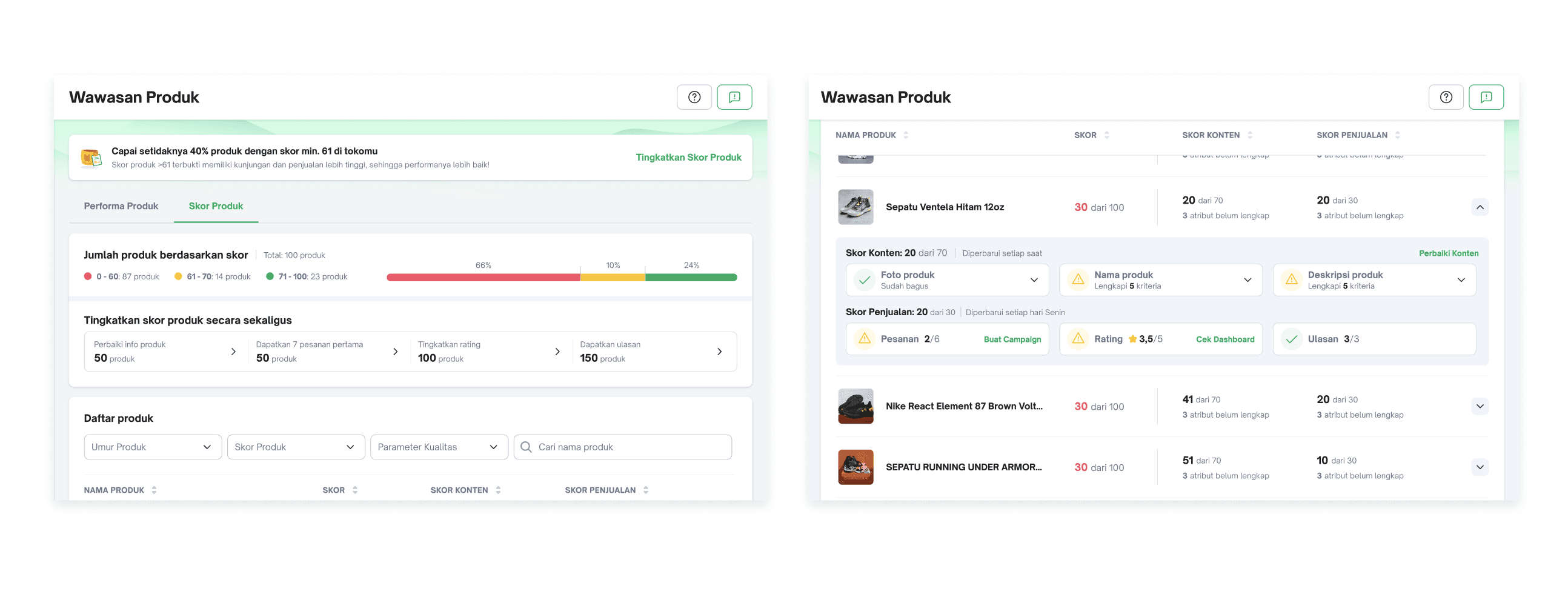
Now let's look deeper
into the design
Learn how the design looks. Enjoy!
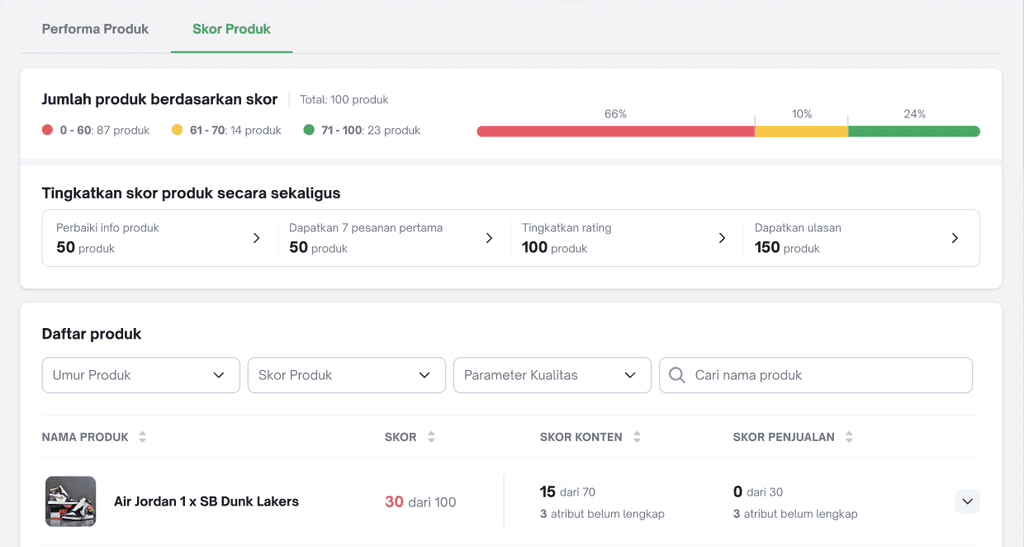
As a Seller, I can see how many of products have bad and good product score.
As a Seller, I can effectively edit my bad performing products in bulk.
As a Seller, I can analyze all bad and good performing products, with their detailed score and requirements.
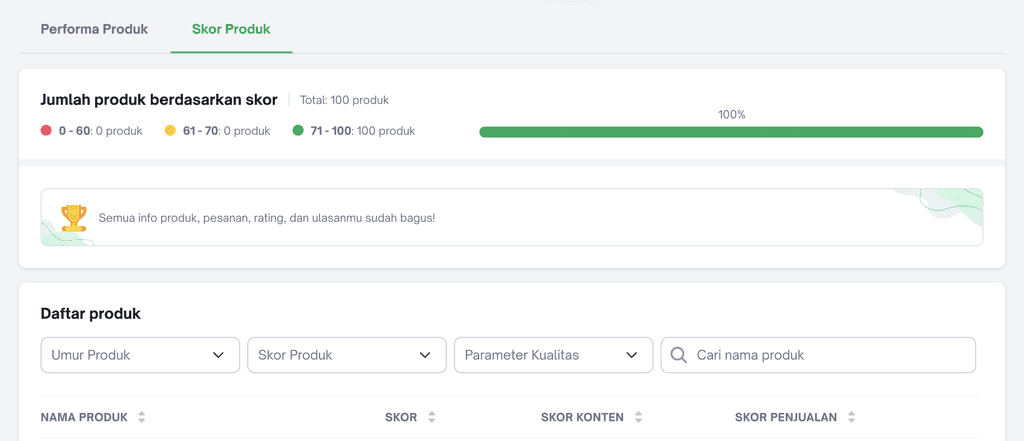
As a Seller, I can get informed and celebrated if my products are all performing.
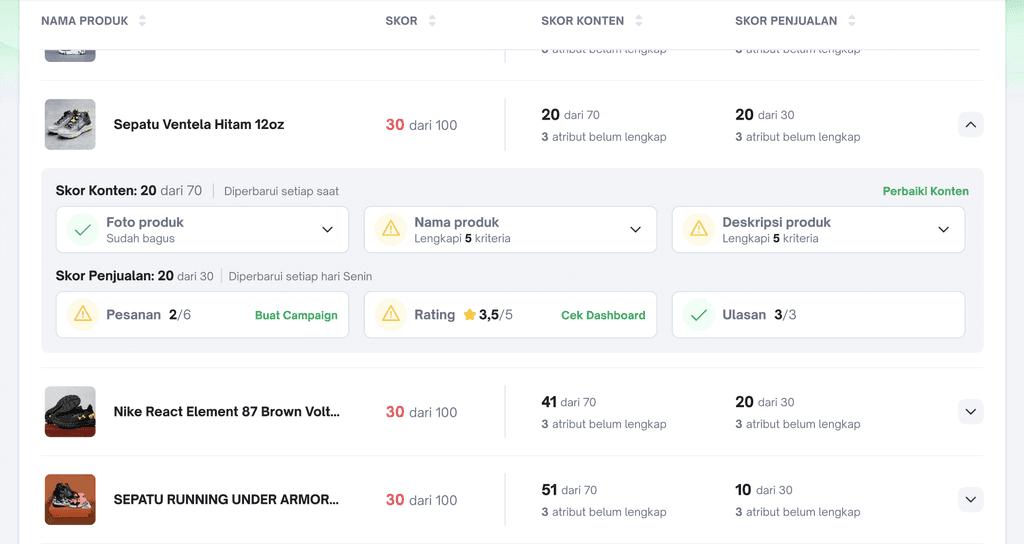
As a Seller, I can learn which parameters required to be fulfilled in order to get good score.
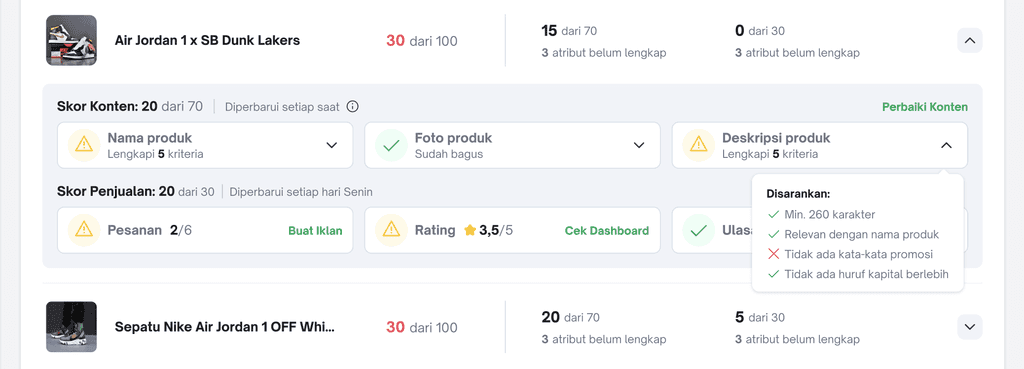
As a Seller, I can see the detailed criteria of each parameters and learn which I have and haven't fulfilled.
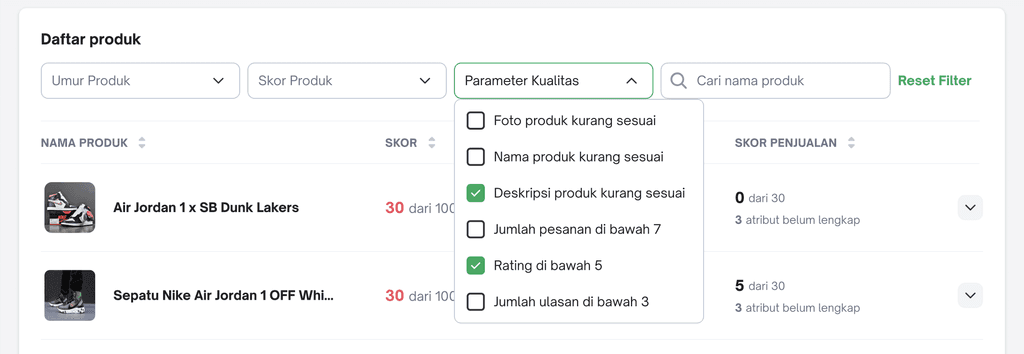
As a Seller, I can narrow down which products that need improvement in a specific category parameter.
Thank you for reading 😺
————————————
See other projects?
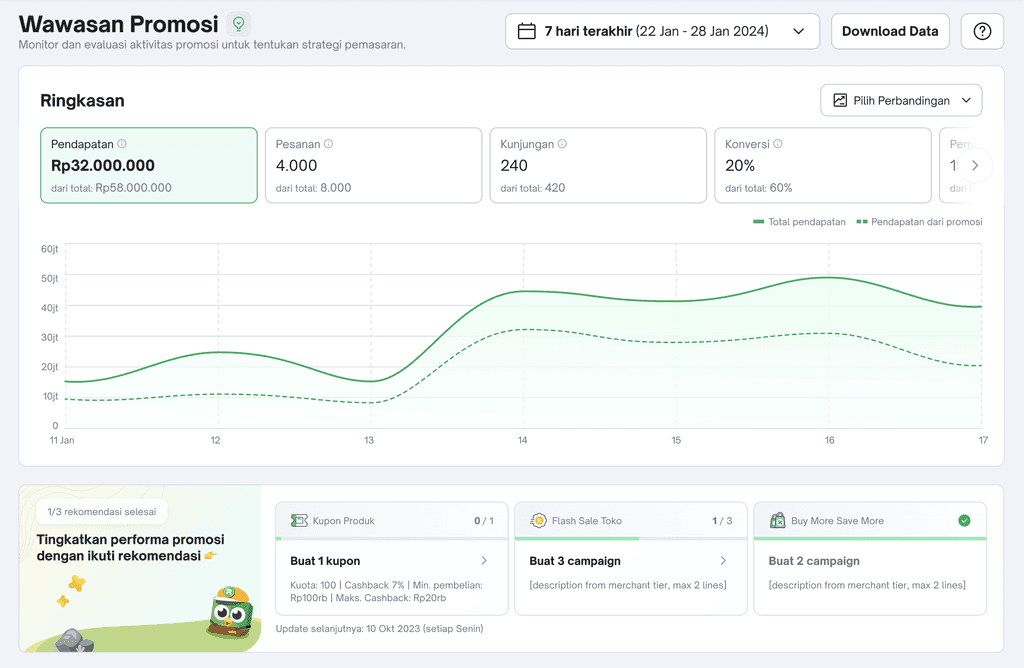
Promotion Analytics
Empowering sellers through comprehensive and strategic promotional decision-making.
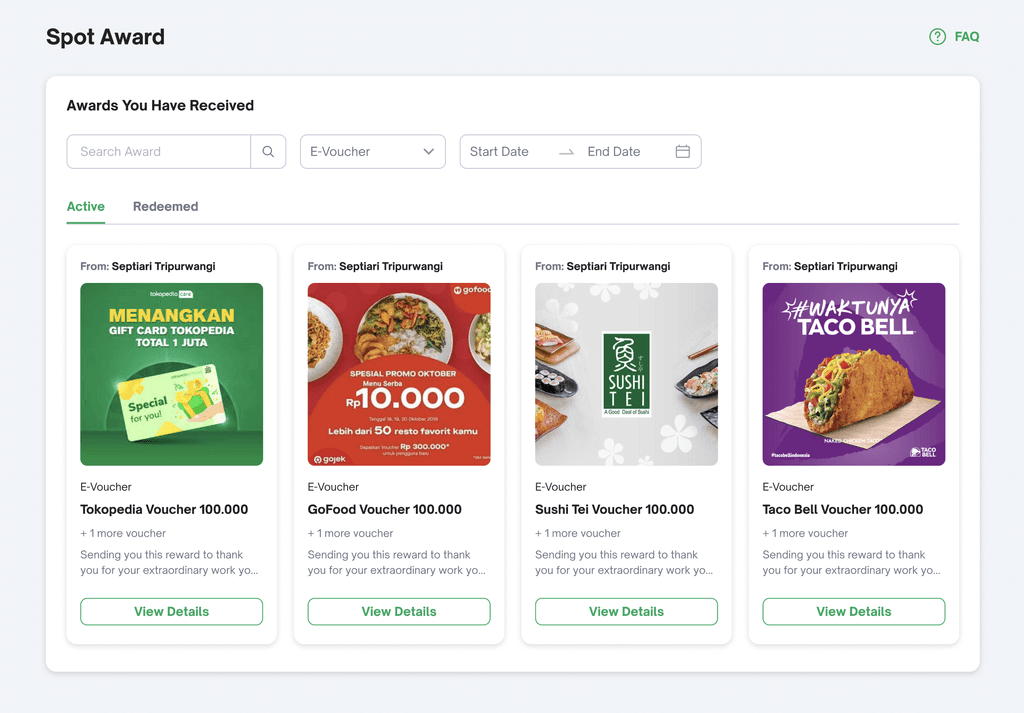
Internal Tools: Spot Award
A recognition ecosystem developed to enable leaders to appreciate their teams.
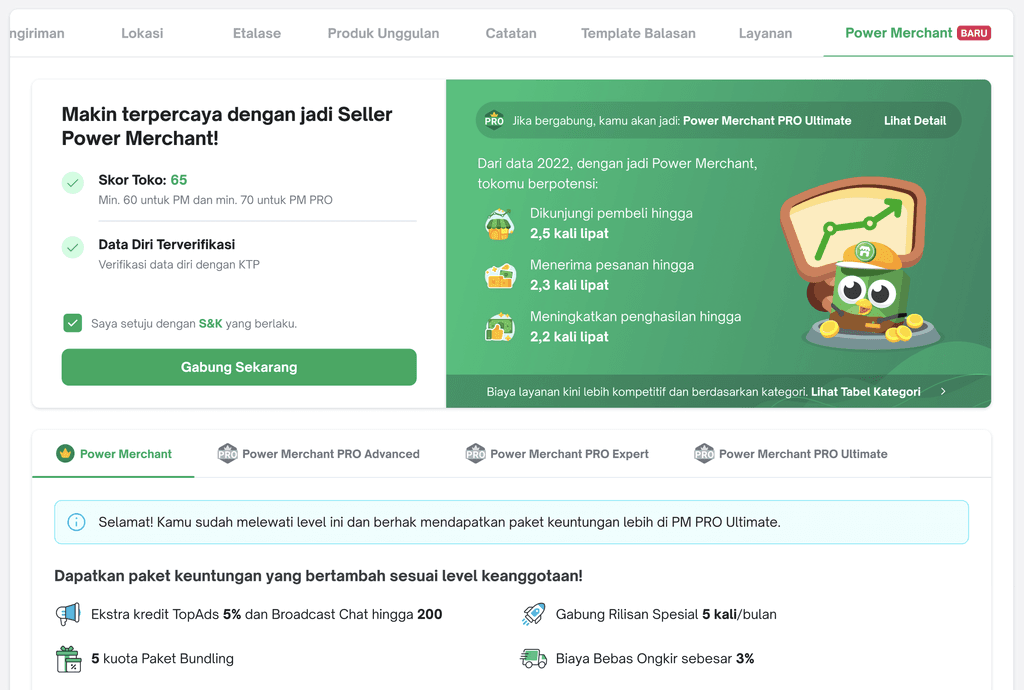
Seller Premium Service
Revenue increase through recalibrated membership scheme and commission adjustment.